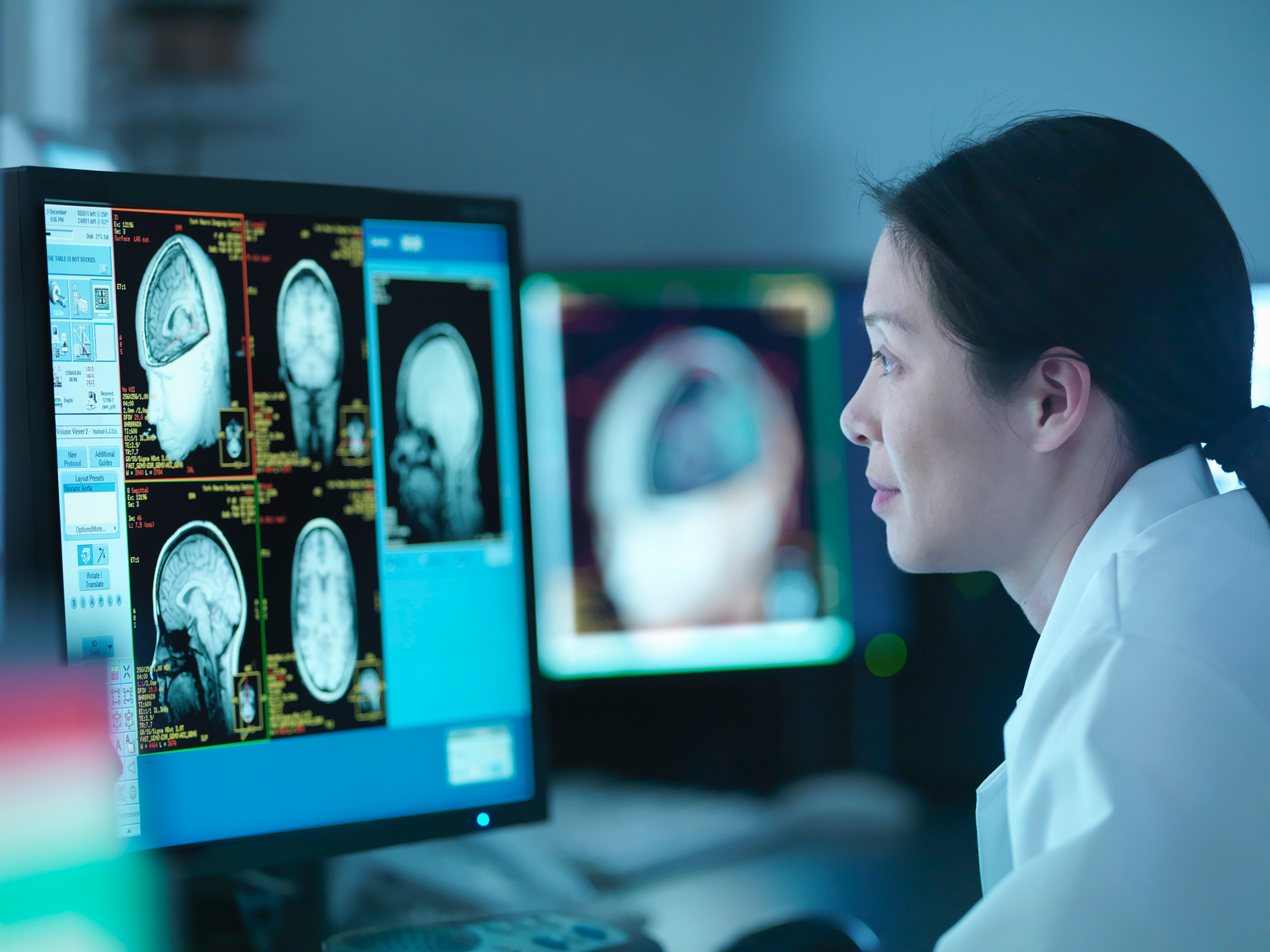
Artificial Intelligence has swept across the globe, and clinical imaging is no exception. Its impact is real, but the leap from powerful tool to human replacement remains a very different story.
From detecting subtle abnormalities to streamlining workflows across multiple organizations, AI has already made a tangible impact. Some algorithms surpass human radiologists in specific tasks, often by a significant margin. That naturally raises the question of whether AI will eventually supplant radiologists.
Predicting the future is less useful than understanding the present. So the better question is what AI can do right now, and what it still cannot do well enough on its own.
What Can AI Do in Clinical Imaging?
When people think of AI in imaging, they often picture an algorithm analyzing a study to detect abnormalities. That is not wrong, but it is only one piece of a much broader picture.
- Workflow orchestration that streamlines imaging operations across complex enterprises.
- Automated reporting that turns spoken concepts into structured diagnostic output.
- Population health analysis that supports early screening and large-scale trend detection.
- Image enhancement that reduces noise and improves clarity.
- Predictive analytics that forecasts risks from imaging data over time.
The possibilities continue to expand, limited only by the creativity of product developers and the quality of the data behind the tools.
How Good Is AI's Performance?
In a word: impressive. AI can outperform human radiologists in diagnosing certain narrow conditions, detect subtle changes that might be invisible to the human eye, and analyze vast datasets with consistency and without fatigue.
But that does not mean radiologists are on the brink of obsolescence.
The Caveats of AI
Despite the hype, AI is not flawless. Performance highlighted by vendors often comes from controlled environments with clean data. Real-world conditions are messier, and performance can dip, even when the algorithm remains useful.
Many tools excel at detecting specific conditions but struggle with false positives. More importantly, AI only does what it is trained to do. Unlike human radiologists, it does not naturally apply broad clinical context or holistic judgment.
Algorithms are becoming more sophisticated and can now address multiple conditions, but human oversight remains essential.
The Takeaway: AI as a Tool, Not a Replacement
AI in its current state is an extraordinary tool. It can improve efficiency, streamline services, and boost diagnostic accuracy. But it is still best understood as a powerful extension of human expertise rather than a substitute for it.
Choosing the right AI requires:
- Thorough research into whether the workflow fit is real.
- Clinical validation from sites already using the algorithm.
- Technical compatibility with PACS and downstream visualization tools.
A poor AI selection can backfire. Organizations sometimes deploy AI without proper workflow analysis and discover it slows them down rather than helping. That is not always the algorithm's fault. Often it is an implementation problem.
Leveraging AI Effectively
With the right approach, AI can be an invaluable assistant. The work is in doing the homework, evaluating the clinical reality, and confirming that the technology integrates cleanly into the imaging environment. When that happens, AI becomes a strong ally in delivering better patient care.